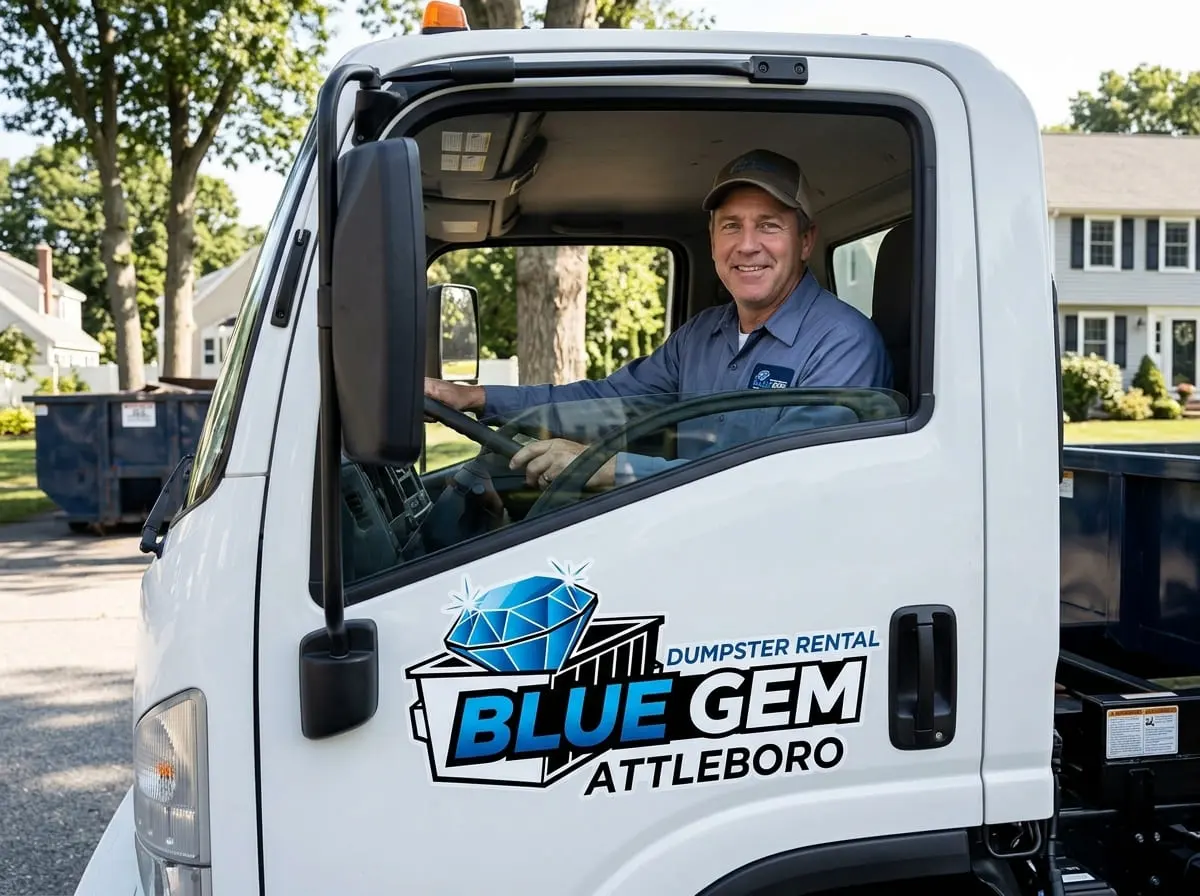
When a nor'easter rolls up the coast or a summer squall line stalls over Bristol County, the cleanup that follows almost always outgrows a few contractor bags at the curb. Downed limbs, storm-shredded fencing, waterlogged sheds, and the occasional stretch of damaged siding or roofing pile up fast, and homeowners across Attleboro, Seekonk, Rehoboth, and the surrounding towns are often left wondering how big a dumpster they actually need — and how quickly they can get one delivered. This guide covers how to size a roll-off container for storm debris, why it pays to separate yard waste from mixed building debris, and why a locally based company like Blue Gem Dumpster Rental tends to matter more after a storm than on an ordinary renovation timeline.
Storm Season in Southeastern Massachusetts
Southeastern Massachusetts sees a fairly predictable rhythm of weather-driven cleanup work. Late fall through early spring brings nor'easter season — slow-moving coastal storms that combine heavy rain, saturated ground, and sustained wind gusts capable of dropping limbs and, occasionally, whole trees. Summer adds the occasional severe thunderstorm or the remnants of a tropical system tracking up the Eastern Seaboard. Because Attleboro sits inland from Buzzards Bay and Narragansett Bay, flooding here tends to be localized — saturated yards, standing water in low spots, occasional backup along smaller waterways — rather than the storm-surge flooding that coastal communities closer to the bay contend with. Still, saturated soil after a wet nor'easter is one of the more common reasons a mature tree comes down in a yard that has never had a problem before.
None of that requires an unusual or headline storm to generate real cleanup work. A routine nor'easter with 40–50 mph gusts is enough to fill a driveway with brush, snap a section of fence, or peel back a few courses of damaged shingles — and that's the debris this guide is really about.
Yard Waste vs. Mixed Storm Debris: Know the Difference
The single biggest factor in pricing and disposal for a storm cleanup dumpster is whether the load is straight yard waste or mixed storm debris that includes building materials. These are handled differently at the transfer station, and mixing them into one load can complicate — and sometimes delay — disposal.
What Counts as Yard Waste
Yard waste is organic, green material: tree limbs and brush, leaves, storm-downed branches, grass clippings, and similar vegetative debris. It's typically processed separately from construction and demolition (C&D) debris — often chipped or composted rather than landfilled. A load of straight branches and brush is usually the simplest and most economical storm cleanup dumpster to arrange. Our yard waste dumpster service is built for this kind of load.
What Counts as Mixed Storm Debris
Mixed storm debris is what you're dealing with when the damage goes beyond trees and brush: a section of fence that splintered, a shed roof that peeled back, damaged siding or gutters, a soaked outbuilding, or debris that combines wood, metal fasteners, shingles, and insulation in one pile. This is treated as C&D debris rather than yard waste, and it generally needs its own container — mixing it with green waste can mean the whole load gets classified, and priced, as mixed C&D rather than clean yard debris. If your cleanup includes both categories, the most efficient approach is often two containers, or at minimum two clearly separated piles staged before the dumpster arrives.
Sizing the Right Dumpster for Storm Cleanup
Storm debris is bulky and irregular, which means it fills a container by volume long before it comes close to the weight limit — the opposite problem you run into with something dense like concrete. That changes how you should think about sizing.
10 and 15 Yard: Limited, Localized Cleanup
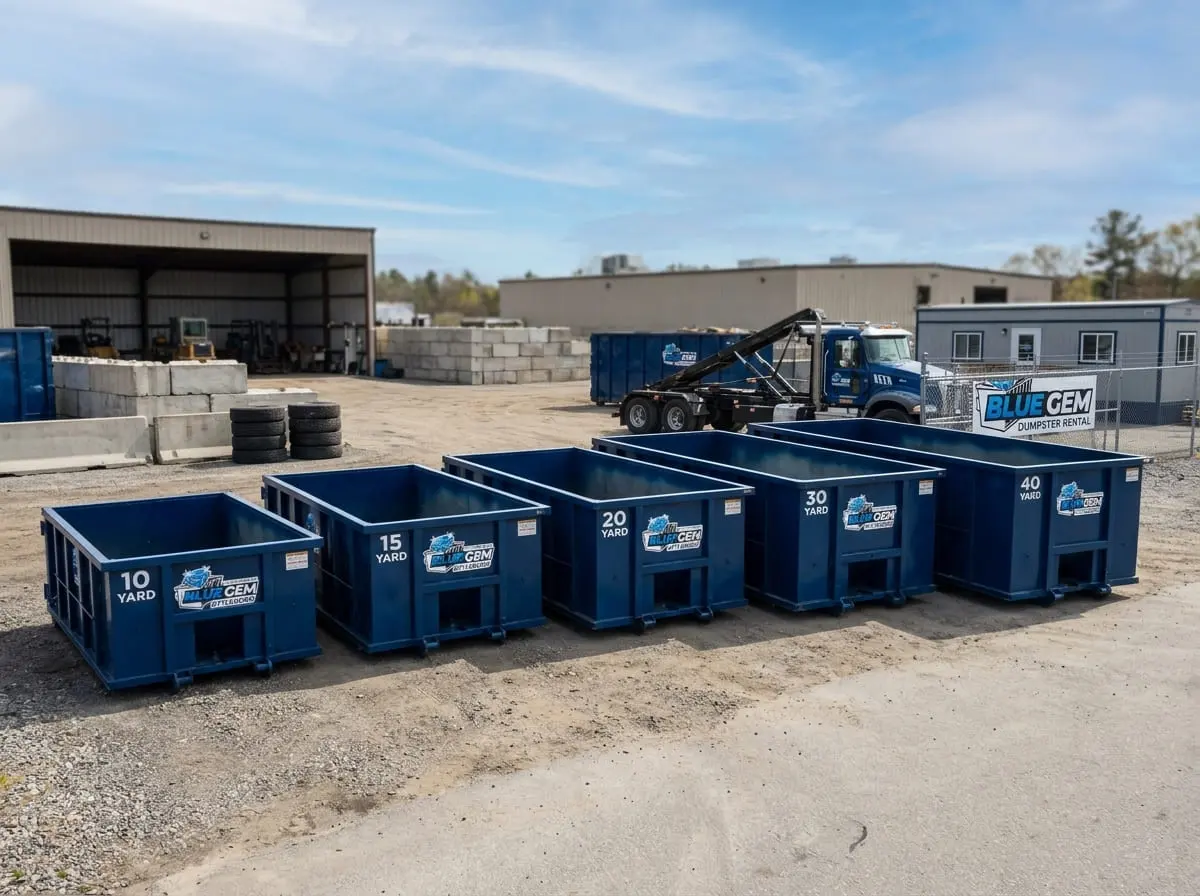
For a single downed limb, a modest amount of brush, or cleanup limited to one section of yard, a 10-yard or 15-yard dumpster is often enough. These sizes work well on tighter driveways too, which matters in some of the older neighborhoods around Attleboro and its surrounding towns.
20 Yard: The Common Middle Ground
A 20-yard container is the size we place most often for a moderate storm event — several downed branches across a property, a full yard's worth of brush after a windy nor'easter, plus some incidental debris like a damaged section of fencing. It's a practical middle ground for households that don't yet know exactly how much debris they're dealing with until cleanup is underway.
30 and 40 Yard: Major Tree Damage or Mixed Building Debris
When a storm brings down a large tree, damages a structure, or the cleanup spans a whole property, a 30-yard or 40-yard dumpster is usually the more efficient call, avoiding the hassle of a second swap-out mid-cleanup. If the debris includes roofing material, our roofing debris disposal guidance is worth a read too, since shingles carry their own weight considerations even in an otherwise bulky, low-density load.
When in doubt, size up rather than down for storm work — a slightly larger container usually costs less, in time and hassle, than needing a second delivery before the next round of weather rolls in.
Why Keeping Green Waste Separate Matters
Massachusetts transfer stations and waste facilities, including those serving Bristol County, generally draw a clear line between yard waste/organics and construction and demolition debris, and often between C&D and regular household trash (MSW) as well. Facilities frequently have different handling — and different fees — for each stream, and many require residents to use permit stickers or follow posted rules for what a load can contain. Keeping a clean yard-waste-only load out of the mixed debris pile isn't just tidiness; it typically keeps disposal simpler and avoids a load getting rejected or re-sorted at the gate.
In practice, this means staging storm cleanup in two piles whenever both types of debris are present: brush and limbs in one area, anything involving building materials, fencing, or storm-damaged structures in another. If you're not sure whether a particular item counts as yard waste, our team can usually answer that with a quick phone call before the container shows up.
Why Local Response Time Matters After a Storm
Storm cleanup is one of the few dumpster rental situations where timing is genuinely urgent rather than just convenient. A downed limb blocking a driveway, debris pinning down a fence line, or damage that needs clearing before an insurance adjuster or contractor can assess it all put real pressure on how fast a container can show up.
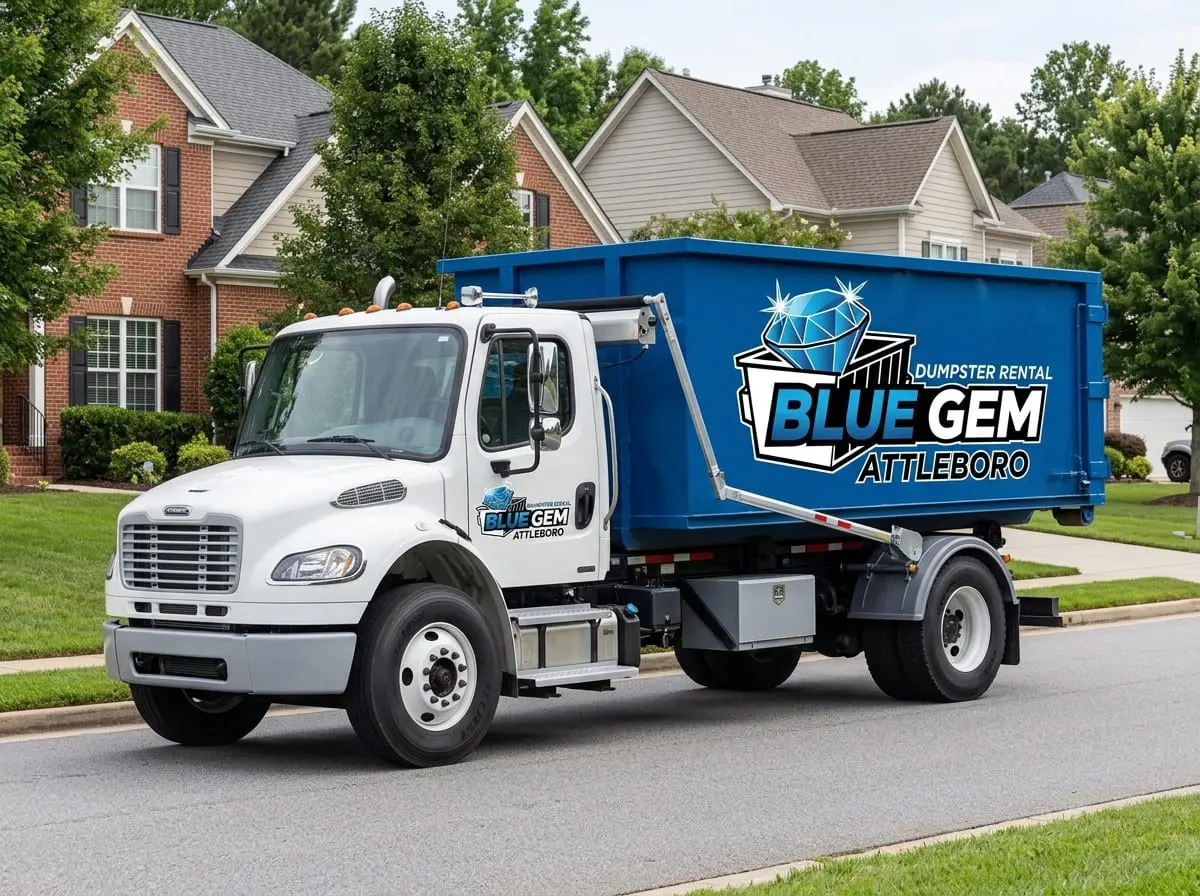
This is where a locally based operation has an edge over a distant national chain. Blue Gem Dumpster Rental runs its trucks and containers out of a yard at 42 Frank Mossberg Dr in Attleboro — not a regional dispatch center hours away — so deliveries across Seekonk, Rehoboth, North Attleborough, Mansfield, Norton, Plainville, and nearby Rhode Island communities like Pawtucket, Cumberland, and East Providence don't route through an out-of-state call center. A locally owned operator also knows the practical realities of the area — which driveways can handle a 30-yard container versus a 15, and how quickly Bristol County transfer stations tend to fill up after a widespread wind event, when everyone nearby is clearing debris at once.
National franchise operations aren't necessarily worse at the job, but they're often working through layers of scheduling and subcontracted trucking that add time — time that matters when a storm has already put you behind. Same-day or next-day availability is easier to promise, and keep, when the company answering the phone also owns the truck.
A Practical Storm Cleanup Checklist
- Confirm whether your cleanup is straight yard waste, mixed storm debris, or both — this drives the container size and, potentially, whether you need one dumpster or two.
- Stage debris into separate piles (green waste vs. building materials) before the container arrives, so loading goes faster once it's on-site.
- Size up rather than down when a storm has caused widespread limb damage or structural debris — a slightly larger container is usually cheaper than a second trip.
- Check for a clear, stable spot for delivery — driveways can be soft after heavy rain, and a fully loaded container is heavy even when the debris inside is bulky rather than dense.
- Call early. After a regional storm, availability across the area tightens quickly as everyone works through cleanup at once.
Whether you're dealing with a single downed limb after a routine nor'easter or a yard full of mixed debris from a harder hit, our team can help you land on the right container size over the phone in a few minutes. Ryan Fontaine has run Blue Gem's roll-off fleet out of the Frank Mossberg Drive yard since founding the company in 2015, and that hands-on local experience shapes the sizing guidance above. Our residential dumpster service covers most homeowner storm cleanups, while commercial accounts can reach the same local team. For smaller loads where you just need debris hauled away rather than a container on-site, our junk removal service may be the faster option.
Call Blue Gem Dumpster Rental at (774) 300-3586, Monday through Saturday, 7:00am to 7:00pm, to talk through your storm cleanup and get a container scheduled.