Attleboro Landlord's Guide to Tenant Turnover Cleanouts
A practical guide for Attleboro-area landlords and property managers on right-sizing a dumpster rental and timing a fast cleanout between tenants.
ReadAttleboro, MA guide
Placing a dumpster on your driveway usually skips the permit process entirely, but street or right-of-way placement in Attleboro typically doesn't. Here's how to tell which applies to your project.

One of the most common questions Ryan Fontaine and the team at Blue Gem Dumpster Rental field from Attleboro homeowners and contractors isn't about size or price — it's about where the dumpster is actually allowed to sit. The short version: a dumpster placed entirely on your own private property (driveway, yard, parking lot) generally does not require a City of Attleboro permit, while a dumpster that needs to sit on the street, in a public right-of-way, or on a sidewalk almost always does. Here's how to tell which applies to your project.
Every Massachusetts city and town draws a legal line between land you own or lease and the public right-of-way — the street, the curb strip, and typically the sidewalk in front of your property. In Attleboro, as in most New England communities, the street itself is public property maintained by the city, even though it looks like it's "yours" because it sits in front of your house. That distinction is the whole ballgame for permitting.
When a roll-off container sits fully within your property line — driveway, side yard, gravel pad, or commercial lot — you're exercising ordinary control over your own land, and most placements don't trigger a permit requirement. The moment any part of the container extends into the street, over a sidewalk, or onto a curb strip, you've placed an object in a space the city is responsible for keeping safe and passable, which is why a right-of-way or street obstruction permit typically comes into play.
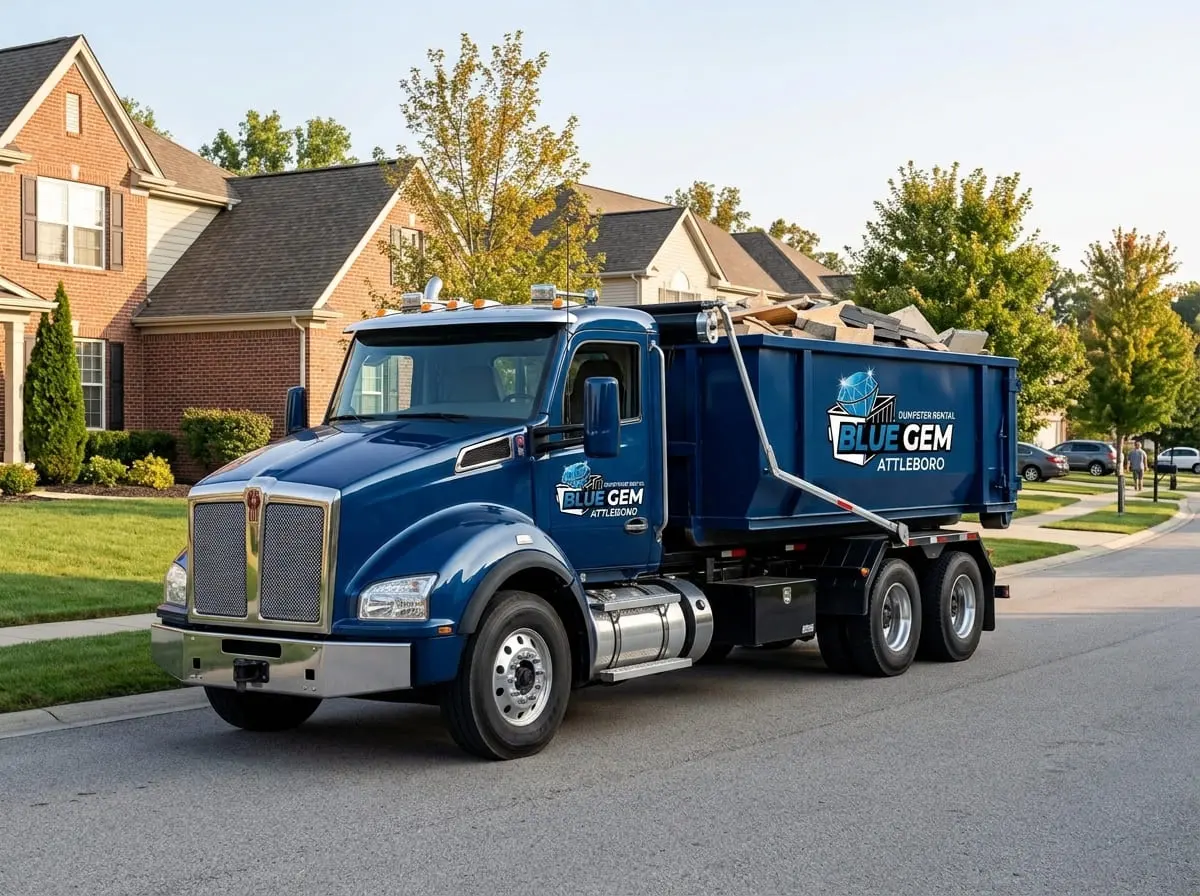
For most residential jobs in Attleboro — a garage cleanout, a kitchen remodel, a roofing tear-off, or a yard waste haul-away — the dumpster fits comfortably on a driveway or in a yard with truck access, and no street placement is needed. General guidance for this kind of placement:
If your driveway is long enough and reasonably level, this is usually the simplest option — no city paperwork, just a scheduled delivery. It's the default we recommend whenever a property has the room, whether you're renting a 10-yard dumpster for a small cleanout or a 20-yard dumpster for a larger renovation.
Plenty of Attleboro properties — especially older homes in tighter neighborhoods like South Attleboro, City Center, or East Attleboro — don't have driveway space that will accommodate a roll-off container, or the driveway is too narrow or blocked by a low carport. In those cases, placing the dumpster at the curb or partially in the street is often the only option, and that's where you should expect to need city authorization. A permit is more likely to be required when:
These are general patterns seen across Massachusetts municipalities, not a substitute for Attleboro's actual current rules — which brings us to the most important step in the process.
Because permit requirements and any associated fees can change, and because they're set by the city rather than by us, always confirm directly with the City of Attleboro before delivery day if there's any chance your container will touch the street or sidewalk. In most Massachusetts towns, this is handled by the Department of Public Works (DPW), sometimes alongside the City Clerk or Building/Inspectional Services office for larger construction jobs. A few tips:
Our team can often give you a general read on whether your placement is likely to need a permit, but the City of Attleboro is the only authority that can actually issue one or confirm current requirements, so we always encourage customers to make that call themselves when there's any doubt.
If your project calls for street placement, most Massachusetts DPWs apply a fairly consistent set of common-sense rules, whether or not they're spelled out on the permit itself:
These are conditions we'd expect the City of Attleboro to apply in some form, consistent with how most Massachusetts DPWs handle temporary street obstructions, but always defer to whatever your permit actually specifies.
Even without a permit to worry about, a full roll-off dumpster is heavy, and the rails it sits on can concentrate weight on a small footprint once loaded with debris, shingles, or concrete. A little preparation protects asphalt or concrete driveways:
None of this makes driveway placement complicated — for most Attleboro projects it's still the easiest option precisely because there's no permit to chase down. It just pays to spend a few minutes looking at your driveway and delivery path the way our drivers will.
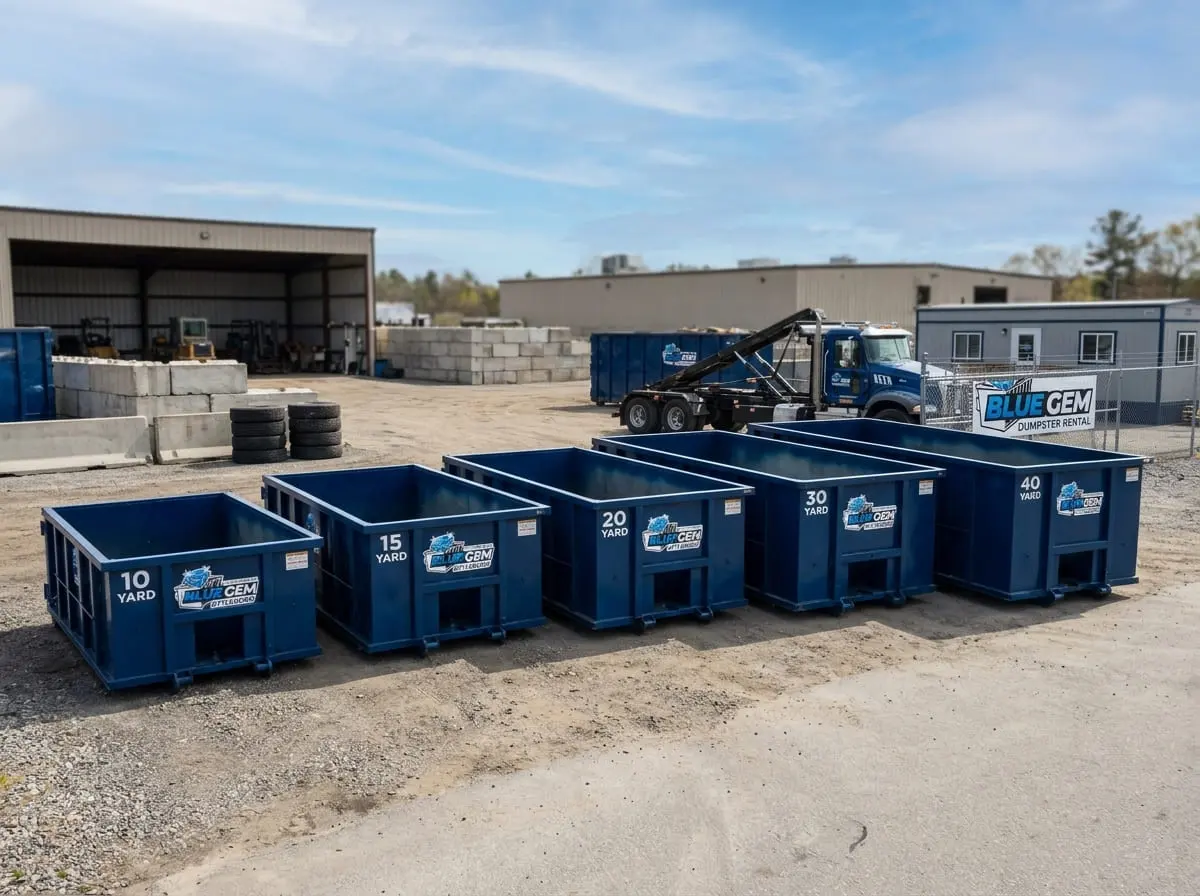
Placement and container size go hand in hand. A narrow driveway or tight right-of-way spot might steer you toward a 15-yard dumpster instead of a bulkier 30-yard dumpster, simply because it's easier to position. If you're unsure what fits your project and property, we're glad to talk it through, whether you're planning a roofing tear-off, a construction cleanup, or a residential decluttering project. We serve Attleboro along with nearby communities including North Attleborough, Mansfield, and Seekonk, and placement rules can vary from one town's DPW to the next, so it's always worth a quick call to confirm local requirements wherever your project is.
Keeping a dumpster entirely on your own driveway or yard is the simplest path and usually skips permitting altogether. The moment a container needs to touch the street, curb, or sidewalk, plan on checking with the City of Attleboro well before delivery, and expect standard conditions like keeping hydrants and sidewalks clear, using reflective markers at night, and working within a defined permit window. Either way, a little planning around your driveway's condition, overhead clearance, and nearby utility lines keeps the rental smooth from delivery to pickup.
Have questions about your specific property or project? Call Ryan Fontaine and the Blue Gem Dumpster Rental team at (774) 300-3586, Monday through Saturday, 7:00am to 7:00pm. We're happy to talk through placement options before you book.
Talk to a real person
Call and describe the job. Flat price, stated tonnage, and a delivery time on the same call.
Mon–Sat 7:00am – 7:00pm
From this guide
Generally no, as long as the entire container stays within your property line and doesn't overhang the sidewalk or street. Most residential driveway and yard placements don't require a city permit, but if you have any doubt about your specific property, it's worth a quick call to the City of Attleboro to confirm.
In most Massachusetts municipalities, temporary street obstruction or right-of-way questions are handled by the Department of Public Works, sometimes alongside the City Clerk or Building/Inspectional Services office. Contact the City of Attleboro directly to confirm which department handles dumpster placement permits and what their current process requires.
Street and right-of-way permits are usually issued for a defined time window that matches your expected rental period rather than being open-ended. If your project runs longer than planned, check with the city about whether the permit can be extended or needs to be renewed.
An unpermitted street placement can potentially result in fines, a requirement to relocate the container, or other enforcement action from the city, depending on local rules. It's much simpler to confirm requirements with the City of Attleboro before delivery than to deal with a problem afterward.
We're glad to talk through your driveway, yard, or street situation and share general guidance based on what we typically see, but the City of Attleboro is the only authority that can officially confirm permit requirements or issue a permit. Call us at (774) 300-3586 and we'll help you figure out the right next step.
Keep reading
A practical guide for Attleboro-area landlords and property managers on right-sizing a dumpster rental and timing a fast cleanout between tenants.
ReadAttleboro's old jewelry-manufacturing mills are getting new lives as lofts, studios, and small manufacturing space — here's what that kind of renovation really pulls out the door, and how to size a dumpster for it.
ReadNor'easters and coastal storms leave behind a mix of brush and building debris. Here's how to size the right container and keep yard waste separate under typical local disposal rules.
Read