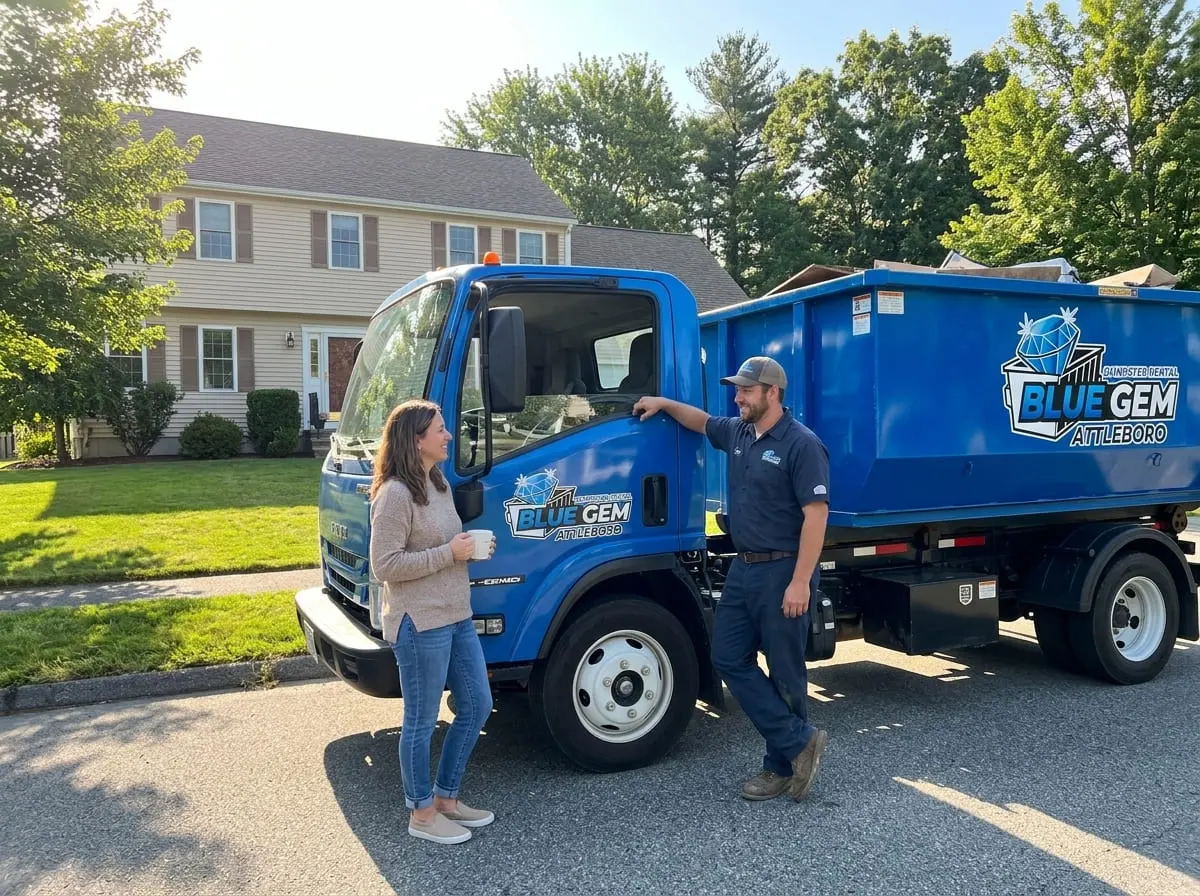
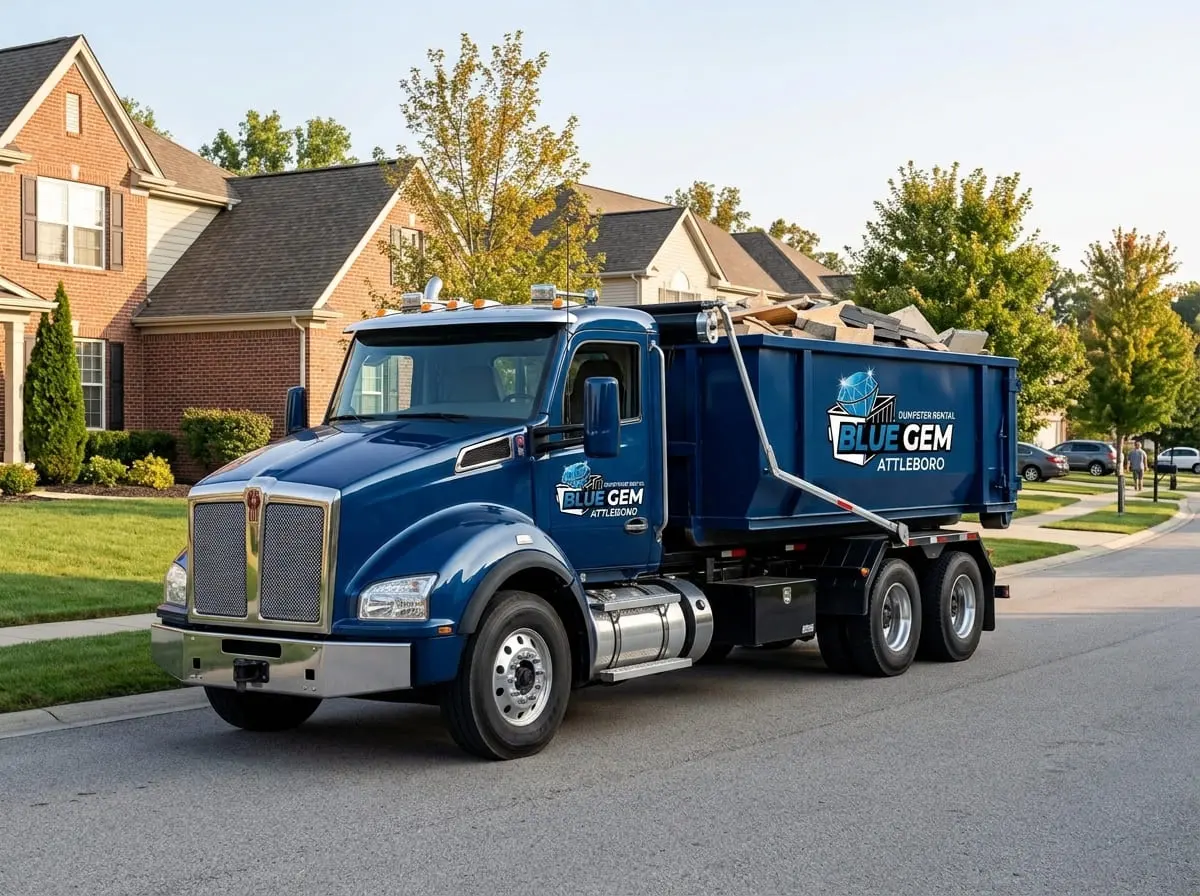
When a dumpster gets picked up from a driveway in Attleboro or a jobsite out toward Norton or Seekonk, most people never think about what happens next. The container rolls away, and that's usually the end of the story from the customer's side. But the debris has a whole second life ahead of it — sorted, weighed, separated, and routed to different places depending on what it is. Understanding that process explains why dumpster rental companies ask the questions they do about what's going into the box, and why a little care loading a container can make a real difference, both in cost and in what actually ends up recycled versus landfilled.
This is a general overview of how construction and demolition (C&D) debris and household junk typically move through the Massachusetts transfer-station and recycling system, based on standard statewide practice in Bristol County and across the Commonwealth. It isn't a promise about any single facility's exact process — those details vary by hauler and by which facility a load ends up at — but the broad strokes below are how the system generally works.
The Basic Path: From Dumpster to Transfer Station
Almost none of the debris that comes out of a residential or commercial dumpster goes straight into a hole in the ground. Instead, loads are typically hauled to a transfer station or a construction and demolition debris processing facility, where material gets weighed in and either sorted on-site or consolidated for shipment to a specialized processor.
At a C&D processing facility, debris commonly moves across a sorting line or through stockpiles where different material types get separated out — sometimes by hand, sometimes with mechanical equipment, often a combination of both. What can be pulled out for recycling gets diverted; what can't gets loaded for transport to a disposal facility. This is standard practice throughout Massachusetts, not a Bristol County quirk.
C&D Debris vs. Municipal Solid Waste: Why the Distinction Matters
One of the first things that happens to any load is a rough sort into two broad categories: construction and demolition (C&D) debris, and municipal solid waste (MSW) — everyday household trash. This matters because Massachusetts has specific waste bans and disposal requirements that apply differently to each category, and because C&D debris tends to contain a much higher percentage of genuinely recyclable material than a typical trash bag does.
A roll-off dumpster from a home renovation, roofing tear-off, or small demolition job is almost always treated as a C&D load. A container used for a garage or attic cleanout, by contrast, often carries a mix of true household junk alongside legitimate C&D material, which is one reason haulers ask upfront what a container will actually be used for. Our construction dumpster service and demolition debris service pages walk through what's typically expected in each type of load.
Statewide Waste Bans Shape the System
Massachusetts has maintained disposal bans on a number of specific materials for years — clean wood, metal, and certain construction materials are generally restricted from routine landfill disposal when they can reasonably be recycled instead. That's a big part of why C&D processing facilities are set up to actively pull recyclable material out of incoming loads. It isn't only good environmental practice; for facilities that accept C&D debris, sorting out banned materials is typically a matter of staying compliant with state requirements.
What Commonly Gets Diverted for Recycling
Not everything in a dumpster load is destined for a landfill. Several material categories are routinely pulled out for recycling once they reach a transfer station, because there's an established market for reusing them:
- Concrete, brick, and masonry. Clean concrete and brick are commonly crushed and reused as fill, base material for roadwork, or aggregate. Because this material is heavy and inert, keeping it separate from other debris is one of the biggest factors in what a load ends up costing — concrete buried in general debris is harder and more expensive to process.
- Scrap metal. Metal — from old appliances and fixtures to structural scrap from a demolition — has real recycling value and is almost always pulled for scrap processors rather than sent to disposal, at nearly every facility in the region.
- Clean, untreated wood. Dimensional lumber and clean wood waste can often be chipped for mulch or processed as biomass fuel, as long as it isn't painted, treated, or contaminated. Treated or painted wood is typically handled differently and may not qualify for the same stream.
- Cardboard and paper. Corrugated cardboard is one of the most consistently recycled materials in any load — but only when kept reasonably dry and separated from wet or contaminated debris.
- Asphalt shingles, in some cases. Some facilities accept clean, single-layer asphalt shingles for recycling into new pavement material, though this varies by facility and shingle condition. Anyone planning a roofing tear-off should ask ahead whether shingle recycling is available for that job.
What Typically Can't Be Recycled and Goes to Disposal
Plenty of debris simply doesn't have a practical recycling path yet, or contains materials that make it unsafe or impractical to process. Mixed household trash, food-contaminated material, most textiles and carpeting, treated or painted wood, drywall (in many cases), and demolition debris too mixed together to sort economically will generally end up disposed of rather than recycled.
Certain items are excluded from dumpster loads entirely under Massachusetts waste regulations and need separate handling — batteries, electronics, paint, tires, and other household hazardous waste typically can't go in a roll-off container and instead need a dedicated hazardous waste or electronics recycling drop-off. If you're not sure whether something belongs in a dumpster, ask before it goes in the box — our FAQ page covers common questions on what is and isn't allowed.
Municipal Transfer Stations, Resident Stickers, and Permits
Separate from commercial dumpster rental, many Bristol County towns operate their own municipal transfer stations for residents who want to bring materials in themselves rather than use curbside pickup or a rented container. These facilities are typically open only to residents, and access usually requires a resident sticker or permit purchased through the town — often tied to your vehicle registration and renewed annually. Fees, accepted materials, and hours vary town to town, so it's worth checking with a town's Department of Public Works before showing up.
Most municipal transfer stations maintain separate drop-off areas for different material types — scrap metal, demolition debris, bulky items, sometimes brush and yard waste — mirroring the same sorting logic used at commercial C&D facilities. That's a good reminder that the "keep it separated" principle isn't just something dumpster rental companies ask for; it's baked into how the whole regional disposal system is designed to work.
Why a "Clean" Load Actually Matters
A clean load simply means debris that's reasonably sorted by type, rather than a jumble of concrete, wood, metal, shingles, and household trash all mixed together. There are two practical reasons this matters.
Cost
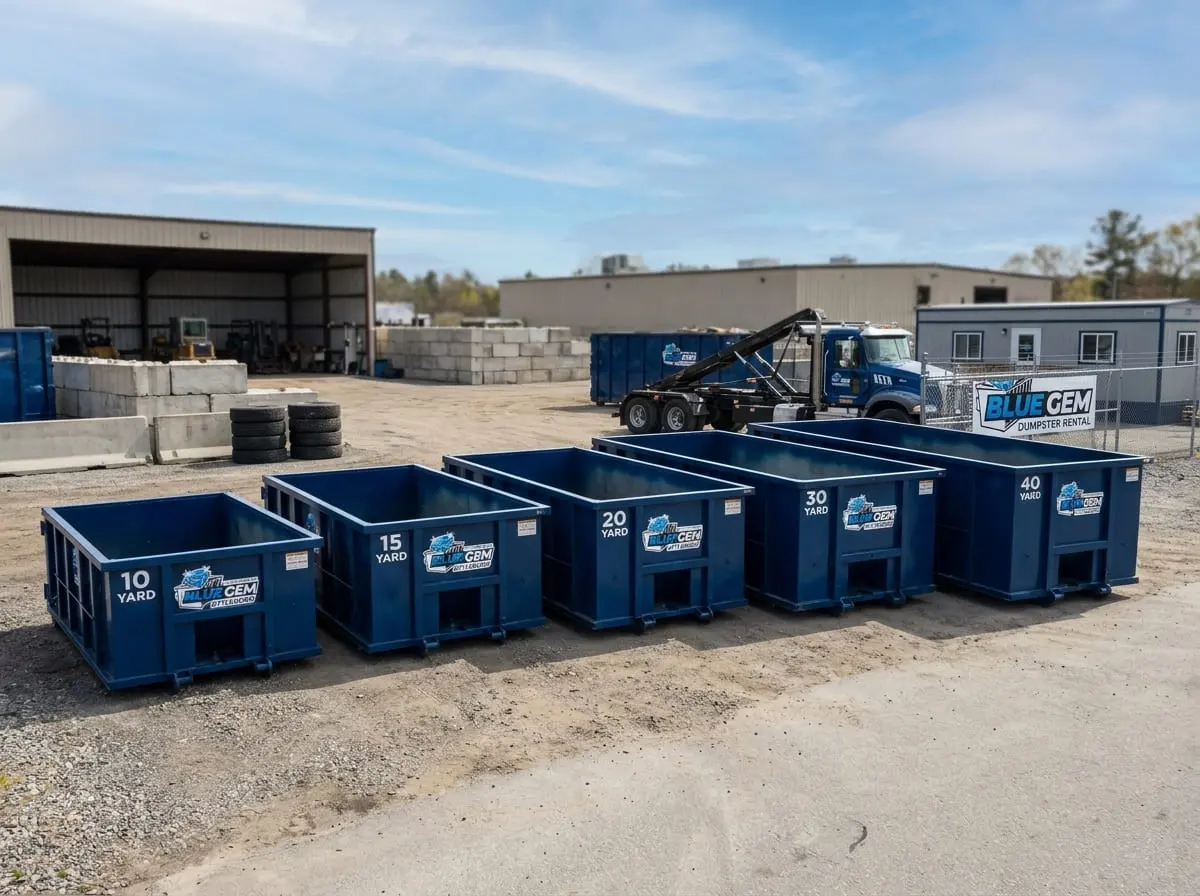
Heavy, dense material like concrete, dirt, and brick is billed differently than general construction debris, largely because of weight limits — a dumpster full of concrete can hit a truck's practical weight limit long before it's visually full. Mixing heavy material into a general debris load, or vice versa, can push a job over its included weight allowance faster than expected. For that reason, if a job includes concrete or heavy debris, it's usually worth asking about a dedicated container. Our concrete and heavy debris service and 20-yard dumpster and 30-yard dumpster size pages are a good place to start if you're planning a project with a mix of material types.
Environmental impact
The cleaner and more separated a load arrives at a transfer station, the more of it can realistically be recycled rather than landfilled. A load of pure clean wood or pure scrap metal is easy to divert almost entirely. The same materials buried inside a mixed load of household junk and debris are far more likely to end up disposed of, simply because separating them out afterward isn't practical at scale. Keeping loads reasonably sorted from the start — even just keeping metal, wood, and cardboard roughly separated from general trash — genuinely increases how much of a project's debris gets a second life.
Planning a Project in Bristol County
Whether it's a kitchen remodel in Mansfield, a roofing job in Norton, a garage cleanout in Seekonk, or a demolition project here in Attleboro, thinking through what's actually going into the dumpster ahead of time makes the process smoother — both for your wallet and for how much material genuinely gets recycled.
Blue Gem Dumpster Rental has run dumpster and container service out of our Attleboro yard since 2015, and owner Ryan Fontaine and the crew are happy to talk through what a project involves before a container gets dropped off. If you have questions about what can go in a roll-off, how a load gets billed, or which size fits your project, call us at (774) 300-3586 — available Monday through Saturday, 7:00 AM to 7:00 PM.